
### FAQ Schema – Digital Marketing Services ```html ```

digitalwithdivya.in

Uncategorized

Uncategorized

What Is SEO and How Does It Work? A Beginner’s Guide

Focus Keyword: What Is SEO SEO Title: What Is SEO and How Does It Work? A Beginner’s Guide Meta Description: Learn what SEO is, how it works, and why it is important for businesses. Discover on-page, off-page, and technical SEO with simple examples. Introduction Have you ever wondered why some websites appear at the top of Google while others are difficult to find? The answer is Search Engine Optimization (SEO). SEO is one of the most effective digital marketing strategies for increasing website traffic without paying for every visitor. Whether you’re a business owner, student, or beginner, understanding SEO can help you grow your online presence. In this guide, you’ll learn what SEO is, how it works, and why it is essential for every website. What Is SEO? SEO (Search Engine Optimization) is the process of improving a website so it ranks higher in search engine results like Google, Bing, and Yahoo. The goal is to make your website more visible when people search for products, services, or information related to your business. For example, if someone searches for “digital marketing services”, an SEO-optimized website has a better chance of appearing on the first page of Google. Higher rankings usually lead to more visitors, more leads, and more business opportunities. How Does SEO Work? Search engines use automated programs called crawlers or bots to discover websites. These bots scan your pages, understand your content, and store the information in Google’s database. When someone searches for a topic, Google analyzes millions of pages and shows the most relevant and useful results. The SEO process works in four simple steps. 1. Crawling Google bots visit your website and scan its pages, images, and links to understand what your website is about. 5 2. Indexing After scanning your website, Google stores your content in its index, which is like a huge digital library of web pages. 4 3. Ranking When someone searches for a keyword, Google compares different websites and ranks them based on quality, relevance, speed, user experience, and authority. 6 4. Displaying Results The best and most relevant pages appear on the Search Engine Results Page (SERP), giving users the information they’re looking for. 5 The Three Main Types of SEO On-Page SEO On-Page SEO focuses on optimizing elements within your website. 5 It includes: Off-Page SEO Off-Page SEO improves your website’s reputation outside your website. 5 It includes: Strong backlinks help Google see your website as trustworthy and authoritative. Technical SEO Technical SEO ensures that your website performs well for both users and search engines. 6 It includes: Why Is SEO Important? SEO offers many long-term benefits for businesses. Key Factors That Affect SEO Rankings Google considers many factors when ranking websites, including: Simple SEO Tips for Beginners If you’re just starting, follow these practical tips: Common SEO Mistakes to Avoid Avoid these common mistakes that can hurt your rankings: SEO vs Paid Ads |SEO | Paid Ads || — | — || Free organic traffic | Paid traffic || Long-term results | Immediate results || Builds long-term authority | Stops when the budget ends || Takes time to rank | Quick visibility | Both strategies can work together, but SEO provides sustainable long-term growth. Conclusion SEO is one of the most valuable digital marketing strategies for growing a website naturally. By creating useful content, optimizing your pages, improving website performance, and building authority, you can increase your chances of ranking higher on Google. Although SEO takes time and consistent effort, the long-term benefits make it a worthwhile investment for businesses of every size. Start with the basics, keep learning, and regularly optimize your website to achieve better rankings, more traffic, and lasting online success. SEO Details for This Blog |Element | Content || — | — || Focus Keyword | What Is SEO || URL Slug | what-is-seo-and-how-does-it-work || SEO Title | What Is SEO and How Does It Work? A Beginner’s Guide || Meta Description | Learn what SEO is, how it works, and why it is important for businesses. Discover on-page, off-page, and technical SEO with simple examples. | This version is Google-friendly, uses a proper heading structure, naturally includes the focus keyword, and is ready to publish on your website.
Digital Marketing, Uncategorized

Why Digital Marketing Is Important for Every Business

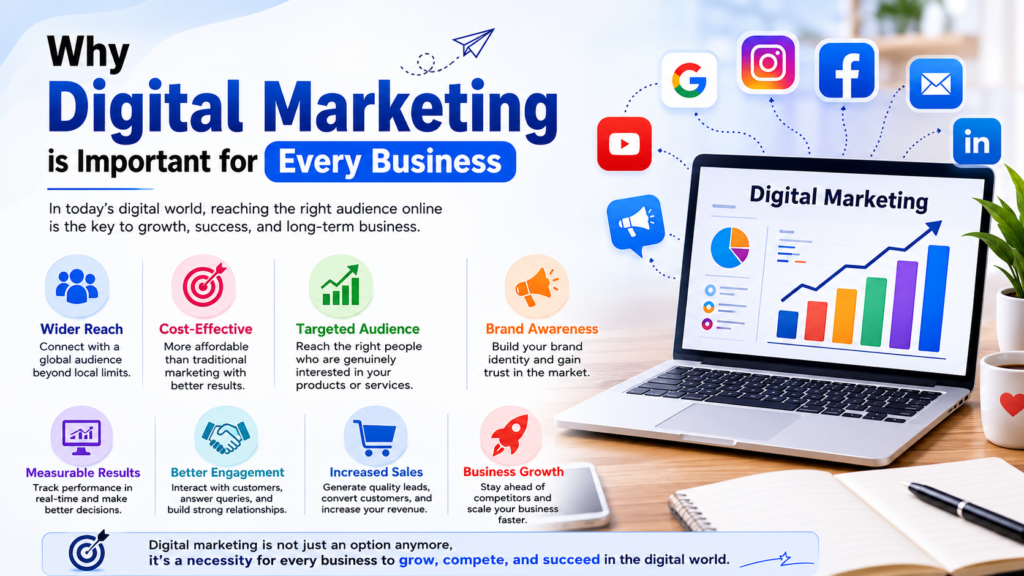
In today’s digital world, having a good product or service is not enough. Businesses also need to reach the right people at the right time. This is where digital marketing plays an important role. Whether you are running a small local business, an online store, a startup, or a large company, digital marketing can help you build your online presence, reach potential customers, and grow your business. What Is Digital Marketing? Digital marketing is the promotion of products, services, or brands through digital channels such as search engines, social media, websites, email, and online advertising. Some common areas of digital marketing include: The main goal is to connect a business with its potential customers through the digital platforms they already use. Why Is Digital Marketing Important for Every Business? 1. Helps Your Business Reach More People People spend a significant amount of time online searching for information, products, and services. Digital marketing allows businesses to reach potential customers beyond their local area. For example, a small business that previously served only customers in its local area can use a website and social media to introduce its products or services to people in other cities and regions. 2. Builds an Online Presence Today, customers often search online before choosing a business. If your business does not have an online presence, potential customers may have difficulty finding or learning about you. A professional website, active social media profiles, and useful online content can help establish your business online and make it easier for people to discover you. 3. Helps You Reach the Right Audience One of the biggest advantages of digital marketing is targeting. Traditional marketing can sometimes reach many people who may not be interested in your product or service. Digital marketing allows businesses to target audiences based on factors such as interests, location, search behavior, and other relevant characteristics, depending on the platform. This can make marketing efforts more focused and efficient. 4. Cost-Effective Marketing Digital marketing can provide options for businesses with different budgets. For example, businesses can start by creating useful content, improving their website for search engines, and building their social media presence. Paid advertising can then be added when the business is ready. This flexibility can be especially helpful for small businesses and startups. 5. Helps Build Brand Awareness People need to recognize and remember a brand before they become loyal customers. Digital marketing gives businesses multiple opportunities to showcase their brand through: Consistent and valuable content can help people become more familiar with your business. 6. Increases Customer Engagement Digital marketing is not only about selling products. It also helps businesses communicate with their audience. Customers can interact with businesses through comments, messages, reviews, emails, and social media. This two-way communication can help businesses understand customer needs and build stronger relationships with their audience. 7. Helps Generate Leads and Sales Digital marketing can guide potential customers through different stages of the buying journey. For example: Discover → Learn → Consider → Contact → Purchase → Return A person might discover a business through Google, learn more by reading its blog, visit its website, and eventually contact the business or make a purchase. A well-planned digital marketing strategy can help businesses attract and convert potential customers. 8. Makes Results Easier to Measure Another important benefit of digital marketing is that businesses can track many aspects of their campaigns. Depending on the platform and strategy, businesses can measure things such as: These insights can help businesses understand what is working and make better marketing decisions. 9. Helps Businesses Compete Online Digital marketing is useful not only for large companies but also for small businesses. A small business can create valuable content, improve its website, use local SEO, and maintain an active social media presence to compete for customers online. The key is not simply to be everywhere, but to choose the right platforms and consistently provide value to the target audience. 10. Builds Customer Trust Customers are more likely to consider a business when they can easily find useful information about it online. A professional website, informative content, customer reviews, clear contact information, and consistent communication can help create credibility. Digital marketing therefore plays an important role in building and maintaining customer trust. Digital Marketing for Small Businesses Small businesses can especially benefit from digital marketing because they can start with simple strategies and gradually expand. For example, a local business could: The strategy should depend on the business, its customers, goals, and available resources. Digital Marketing Is More Than Just Social Media Many people think digital marketing means simply posting on Instagram or Facebook. However, digital marketing is much broader. A successful strategy can combine SEO, content marketing, social media, email marketing, paid advertising, website optimization, and analytics. Different businesses may need different combinations of these methods. How to Start Digital Marketing for Your Business If you are new to digital marketing, you do not have to use every strategy at once. Start with these basic steps: Step 1: Define your target audienceUnderstand who your ideal customers are and what they need. Step 2: Set clear goalsDecide whether you want to increase awareness, generate leads, increase sales, or build a stronger online presence. Step 3: Create a professional websiteYour website can act as the central online destination for your business. Step 4: Choose the right platformsFocus on the digital channels where your target audience is most likely to spend time. Step 5: Create useful contentShare information that answers questions and provides value to your audience. Step 6: Optimize for search enginesUse SEO techniques to make your website and content easier for search engines to understand and discover. Step 7: Measure your resultsReview your performance regularly and improve your strategy based on the data. Conclusion Digital marketing has become an important part of modern business growth. It helps businesses build an online presence, reach relevant audiences, communicate with customers, generate leads, build trust, and measure marketing performance. Whether you are a small business owner, entrepreneur, startup,

Scroll to Top